Joshua Espinosa on his debut album, “AMERICAÑA” [INTERVIEW]
An INTERVIEW WITH Joshua Espinosa about his debut album “AMERICAÑA”
Joshua Espinosa is a songwriter and multi-instrumentalist based in Minneapolis, MN. He plays an Americana style rooted in bar room blues, flatpicker bluegrass, 70s rock and 90s alternative. Originally from Los Angeles, he worked the fringes of the SoCal, Bay Area and Twin Cities music scenes until finally finding footing with his debut album, Americaña, produced by the legendary songwriter, Kevin Bowe.
Interview Contributed to by Krista Vilinskis of Elephants and Flowers Media
Photos by Sam Wagner

Joshua Espinosa | Americaña album cover | design by Christopher Kornmann
Joshua Espinosa’s Americaña
Produced by Kevin Bowe, an acclaimed songwriter who wrote songs for three platinum records and two Grammy winning albums, Joshua Espinosa’s debut album Americaña is not really a traditional Americana album at all. It’s a collection of songs that reflects all kinds of different types of American music, from bar room blues to bluegrass, 70s rock, 90s alternative, and even some New Orleans second line styling.
At the heart of the Americaña album, though, is its lyrics. At the core of each song is something so basic, yet so profound at the same time –humanism. There are sweet songs about relationships and wistful songs about getting older. But there are also raucous songs about regret, degeneracy and crushing guilt.
Tying it all together is Joshua’s way of singing about all those conditions that will at once break your heart and fire you up.
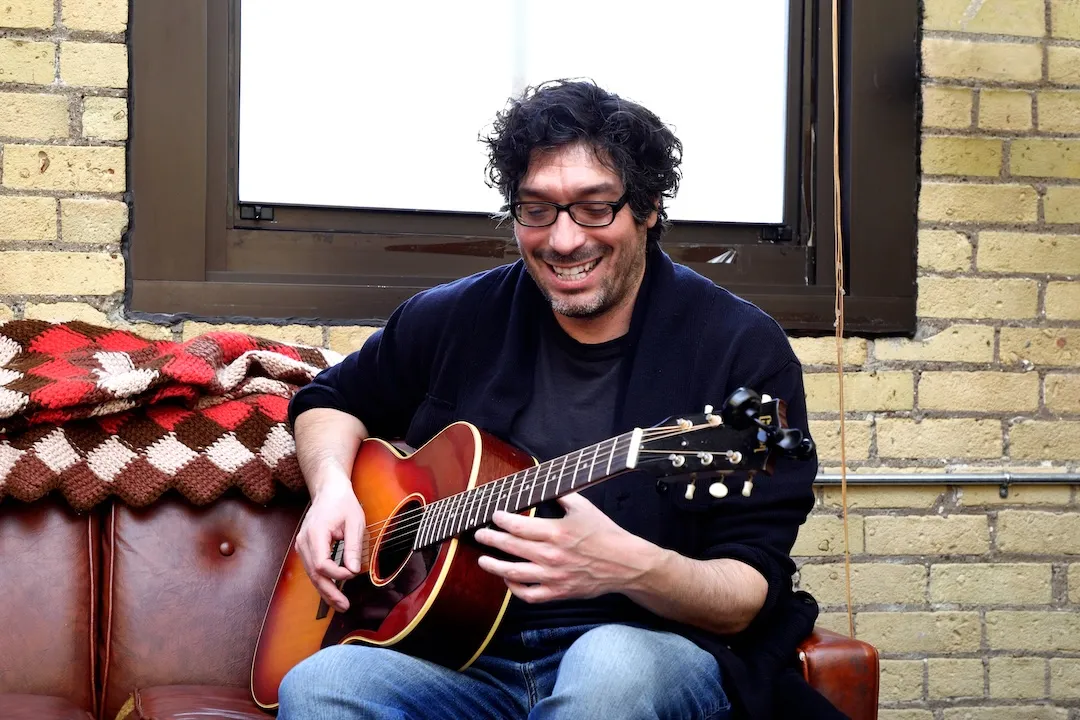
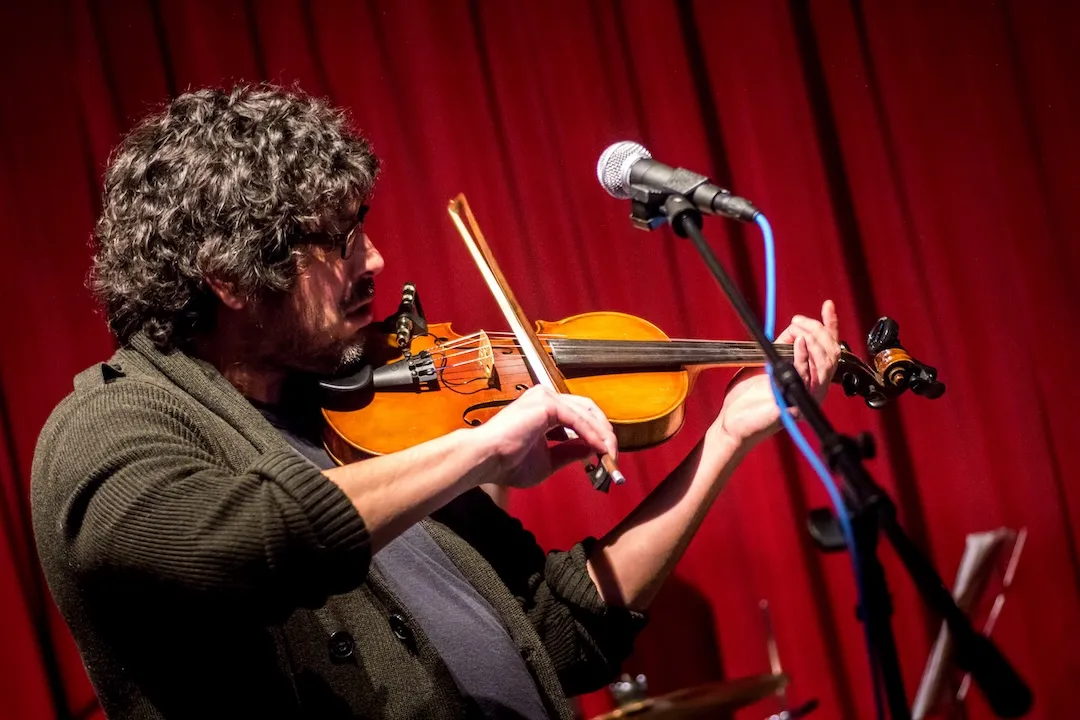
Joshua Espinosa | Sam Wagner photo
INTERVIEW: Joshua Espinosa
by Krista Vilinskis of Elephants and Flowers Media
1. The Heart of AMERICAÑA
“AMERICAÑA” is such an evocative title — and even its pronunciation, ‘American-yuh,’ has this playful, human touch. What does that word mean to you personally, and how does it capture the spirit of the record?
I love that you picked up on that! Having such a Hispanic last name, I really wanted to give listeners a clue into what they were about to hear. It’d be easy to see Espinosa and think a Latin style of music, but that’s not what I play at all. I play a blend of styles rooted in American traditions — blues, rock, country, etc. Of course, a lot of that gets thrown into the same; Americana; bucket, so adding the eñe, or tilde if you prefer, seemed like a good way to summarize the stylistic ambiguity while connecting the dots that you are listening to a Latino playing quote, unquote Americana.
You’ve said the album isn’t a traditional Americana record, but rather a blend of many American sounds. How do you see these different genres — blues, bluegrass, 70s rock, 90s alt — speaking to each other in your songs?
I think all those influences come to a crossroads in my playing simply because I’m always trying to stay within my abilities and sensibilities, and at the same time, I love so many different musical styles. I pull techniques from all kinds of music and work them out so I can feasibly execute them within what I’m trying to do.
In the end, I’m always just trying to write a catchy radio hit, but what comes out is usually whatever the chords, words and vibe is leading me toward. I guess I sound like a lot of styles because I listen to a lot of styles.
2. Humanism and Honesty
You describe the heart of this album as “humanism.” That’s a beautiful word. When you think about writing from that space — what truths or emotions were hardest to express, and which came most naturally?
What a great question. Some of the hardest things I’ve ever written were harsh truths about myself. I try not to lie to myself if I’m self-aware enough to look in the mirror. I’m also not afraid to write those things down into a song, explore them, exaggerate them, downplay them, etc. In many ways, I’m honest to a fault and that’s what makes writing about the hard stuff natural for me.
Ultimately, I think people connect with those things because deep down, I bet we all have a lot of stuff in common, whether we’d care to admit it or not.
There’s this balance of heartbreak and hope across your lyrics — songs that “break your heart and fire you up.” How do you navigate that emotional duality when writing and performing them?
I think heartbreak and hope are byproducts of each other, in that the more you hope, the more you leave yourself out there for disappointment, and the more pain you endure, the more you hope it all gets better. I guess I don’t know if that cycle ever breaks, but it’s something I think about a lot. Just the other day, I was rolling around the idea of enjoy the moment as long as you can because soon it will suck.” Super positive, huh?
3. The Creative Process
Recording with Kevin Bowe, who’s worked with legends like Etta James and Jonny Lang, must have been a powerful experience. What was the most surprising or transformative moment you had together in The Kill Room studio?
Obviously, I could sit here and gush about Kevin as a musician, producer, engineer and bass player, but the most transformative thing about working with him was just getting to know him, experience how he approaches things and what not. He put a mark on my life that I’ll never be able to explain, and I’m just so happy to have met him.
You play so many instruments on this album — from guitar and violin to mandolin and keys. How do you decide which instrument tells the story best for each song?
Well, Kevin has this concept that helps lead him, that the song will tell you what it needs. And so, once you start deciding what the beat is and the general vibe, the instrumentation to create that vibe starts to reveal itself. Kind of magical how logical it is, to be honest.
Was there a particular track that went through a major transformation in the studio — one that ended up somewhere totally different from where it started?
‘Mud’ definitely became something more unexpected than I would have originally thought. When Kevin and I were first looking at the direction we were going to take with it, I had mentioned that I liked a New Orleans-y sound to it, and he took off with it.
For a while, to be honest, I thought we went too far with it, as there’s really a lot of different instruments being pretty assertive with the main melodic theme, but in the end, the chaos of it worked, and it really started to remind me of some of John Coltrane’s later albums, such as ‘Ascension,’ which really struck a chord with me when I heard the final mix. Being able to connect to that made me know that we made the right choices with that tune.
4. Collaborations and Chemistry
The duet “Me or the Whiskey” with Sarah Morris is such a standout. How did that collaboration come about, and what made Sarah the perfect voice to share that song with?
For a handful of songs, there was a need for some Emmylou Harris-style harmonies, and Kevin, of course, knew just who to turn to for that. So, he introduced Sarah to me, and she came in and was just wonderful to work with. She’s got a great new album out called ‘Say Yes’ that’s easily streamable, and I gotta say, I think her vocal is the best part about the ‘Me or the Whiskey’ recording.
You’ve also got a powerhouse lineup of musicians — from Tommy Barbarella to Peter Anderson. What was it like building this musical community around your debut album?
Once again, that’s all Kevin’s musical community that he generously introduced me to. And all those people are so stinkin’ nice, too! Being someone who’s pretty new to the Minneapolis music scene, it feels like I’ve been welcomed with open arms. Not to mention having been able to sit there and listen to them record their parts in real time. Just an experience I’ll cherish forever.
5. Storytelling Through Sound
Songs like “Meet Me in Pittsburgh” and “Dark Forest Trees” feel almost cinematic — full of imagery and movement. How do you visualize a song while you’re writing it?
I suppose I just think about telling a story. I want to set the scene, then I want to push the scene forward, and then I want to resolve the situation. And interesting that you use the word cinematic. I hadn’t really thought about it, but I do actively want the listener to visualize the lyrics as much as I want them to hear it. It’s because I want to visualize it. Like, when I close my eyes and sing the lyrics, I want to see the emotion so I can feel it more intensely.
The record moves from raucous barroom energy to intimate reflection. Did you think about sequencing the tracks like a narrative — a journey of sorts through the American soundscape?
Unfortunately, I am not so smart. I started with an order of songs that I thought would lead me from one vibe to the next and fine tuned from there, meaning that I wanted to make sure the listener wasn’t getting whiplash going from high-energy tunes to low and then back again. I wanted the transitions to gently carry you from place to place.
But I can see how the fact that even though I may have not been consciously aware about how the styles fed into that, it would make sense that the stylistic differences from song to song would create the vibes, which determines the tempos and energy and whatnot.
6. Reflection and Resonance
As a debut, “AMERICAÑA” feels both confident and vulnerable. Looking back, how do you feel this album represents who you are right now — both as a person and as an artist?
Yeah, I think on a basic level this album is a great representation of my music. People really seem to be picking up on the genre-agnostic leaning it takes and also, there’s been a lot of great things being said about the lyrical content. So, it communicates its purpose, which is important to me.
On a deeper level though, a lot of these songs were written ages ago, and recording wrapped up in January 2025, almost a whole year ago now. And the thing is, I learned so much doing this album and going through all the steps of releasing it that I think I’m even more confident and have been writing more vulnerable stuff in the last year or so. But in the end, yeah, I think pointing to the ‘Americaña’ album will suffice when people ask me what the music sounds like.
What do you hope listeners feel when they hear these songs for the first time?
I guess I’d hope they find some kind of connection to it. If people can listen to it and identify with any aspect of it, I think that’s a win. Hopefully, there’s a little something for everyone.
If you could sit down and play this album for your younger self, what track do you think would resonate most — and why?
Man, there’s a lot for a lot of different reasons, but ‘Gracelessness’ would probably be the biggest jaw-dropping moment for my younger self. I wrote that song when I was really just starting to write songs, and the fact that after all these years, that one made such an impression on Kevin freakin’ Bowe that he quote-unquote said he had to produce it, it would have provided a type of encouragement that I probably could’ve used back then.
7. Looking Ahead
The album released October 17, 2025 — a big milestone. How did you celebrate, and what comes next on the horizon?
Me and my band The Gut Buckets played to a packed house at the Bryant Lake Bowl Theater in Minneapolis, and we had a marvelous time. My homies Blake Hartman and Tom Lieberman (of ‘A Prairie Home Companion’ fame) opened the show with some killer sets, too, and I just had fun hanging with everyone.
What comes next is some wind down time with the family — a lot of their time got sacrificed in the lead up to the release and all the rest. Probably get back in the studio soon, but I won’t make any real push until after the holidays. Ultimately, I just do like Cat Stevens and go with the wind of my soul, so we’ll find out together.
Finally — if “AMERICAÑA” is your love letter to American music, what do you think the next chapter in that letter might sound like?
All I really know is it’s going to sound like me, man!
Americaña Album Credits:
Recorded, produced & mixed by Kevin Bowe in the Kill Room, Minneapolis, MN
Mastered by Bruce Templeton at Microphonic Mastering
Art direction & design by Christopher Kornmann for Spit + Image
Vocals, guitars, violin, keys, mandolin, ukulele – Joshua Espinosa
Bass, guitars, percussion, harmonica, organ, banjo, backup vocals – Kevin Bowe
Drums – Peter Anderson
Piano – Scottie Miller
Wurlitzer & Hammond B3 – Tommy Barbarella
Pedal Steel – Ken Wilson
Trumpet – Paul Odegaard
Upright Bass – Tommy Vee
Tuba & Trombone – David Budimir
Backup Vocals – Monique Blakey & Sarah Morris
Website and Social Media:
WEBSITE: joshuaespinosa.com
INSTAGRAM: https://www.instagram.com/jespinosa612/
FACEBOOOK: https://www.facebook.com/josh.espinosa.338
SOUNDCLOUD: soundcloud.com/je612


Reviving the Vibe: A Trip Thru Time at Yahn Dawn 2026
REVIEW: Pretty Lights’ “Yahn Dawn” festival returned to Buena Vista, CO in September 2026 with LP Giobbi, MADHAUS, Emancipator,, Gramatik,, RJD2 and more.
Get Your BaygrASS to Annapolis for Baygrass Festival: 2026 Annapolis Baygrass Festival Review
Get Your BaygrASS to Annapolis for Baygrass Festival: 2026 Annapolis Baygrass Festival Review Annapolis Baygrass Music Festival took place at Sandy Point State Park in Annapolis, MD, on September 19 & 20, 2026. Headliners Little Feat and Sam Bush were joined by...

Yahn Dawn 2026: Schedules, Activities and Know Before You Go
Pretty Lights’ Yahn Dawn Festival Guide: Schedules, activities, and Know Before You Go info for 3-day festival at Meadow Creek in Buena Vista, Colorado – September 18-20, 2026.

North Carolina Folk Festival: Free Music in Greensboro, NC with St. Paul and the Broken Bones, The Roots and Molly Tuttle
The North Carolina Folk Festival will return to Greensboro, NC, September 19 – 21, 2026. This non-profit event blends music, community, and culture for a multi-day event with free admission for everyone. This year’s music lineup features St Paul and the Broken Bones, The Roots and Molly Tuttle.

Fruition Releases “Something More” and Announces Their Final Tour: An Emotional Farewell From Festy GoNuts
With the release of “Something More,” Fruition has announced that this will be their final album. A final tour is to follow. Festy GoNuts has had Fruition as our soundtrack for 15+ years. Read why.
Bonnaroo Announces 2027 Hiatus For “Much Needed Year Off”
Bonnaroo shared on social media that the festival will take a hiatus in 2027.
Bryan Sutton Bridges Bluegrass Past And Future On “From Roots to Branches Vol. 1”
Bryan Sutton is one of the best bluegrass pickers in the world. “From Roots to Branches, Vol. 1” proves it – alongside pickers like Billy Strings, Tony Rice, Sierra Hull, Trey Hensley and more.
![Maura Dunst (The Foxgloves, Triple Fiddle) on New SOLO EP, “Violin Songs” [INTERVIEW]](https://www.festygonuts.com/wp-content/uploads/2026/08/Violin-Songs-Front-Cover-400x250.webp)
Maura Dunst (The Foxgloves, Triple Fiddle) on New SOLO EP, “Violin Songs” [INTERVIEW]
An interview with Maura Dunst of The Foxgloves on her new solo EP, “Violin Songs”
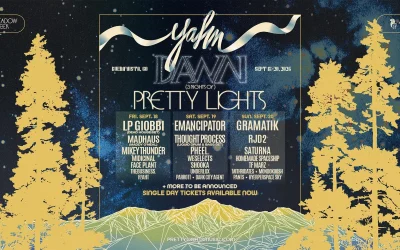
Pretty Lights’ “Yahn Dawn” Reveals Daily Lineups, Single Day Tickets for Buena Vista, Colorado Festival
Pretty Lights’ “Yahn Dawn” festival returns to Buena Vista, CO with LP Giobbi, MADHAUS, Emancipator,, Gramatik,, RJD2 and more for expanded 3-day festival in September 2026.
![Neo-traditional Americana performer Hans Halstead [INTERVIEW]](https://www.festygonuts.com/wp-content/uploads/2024/08/Hans-Halstead-Minnesota-Girl-440x264.webp)

![Sarah Morris On New Album “Here’s To You” [INTERVIEW]](https://www.festygonuts.com/wp-content/uploads/2023/05/Sarah-Morris-Heres-To-You-Cover-Art-440x264.jpg)