Maura Dunst (The Foxgloves, Triple Fiddle) on New SOLO EP, “Violin Songs” [INTERVIEW]

An Interview With Maura Dunst (The Foxgloves, Triple Fiddle) on Her New SOLO Album, “Violin Songs”
Interview contributed by Krista Vilinskis of Elephants and Flowers Media
Violin Songs is a five-song project by Minnesota fiddle player Maura Dunst (The Foxgloves, Triple Fiddle). Arranged and performed by Dunst, Violin Songs takes a new spin on well-loved covers by Sheryl Crow, Bruce Springsteen, Hozier, Brandi Carlile, and R.E.M., set for one voice backed by a quartet of violins.
STREAM “VIOLIN SONGS” ON SPOTIFY

Maura Dunst Interview:
Violin Songs feels like an invitation to slow down. Was creating this record a response to the pace of modern life, or did that atmosphere emerge naturally as you were arranging these songs?
That’s an interesting takeaway. I do feel that I’m like a superball thrown in a small space a lot of the time, just pinging from thing to thing at lightning speed. Daycare drop-off, work, grocery store, vacuuming, daycare pickup, quality time with kid, dinner/bath/bedtime routine, cleaning up the house, meal prep, doing music admin work, going to bed. And somewhere in there I try to exercise, practice my instrument(s), write songs, practice with my bands, hang out with friends and family, respond to texts and emails, potty train my toddler, keep up on Bravo reality TV drama, read a book, etc etc etc. I don’t even realize the pace I run at until I encounter someone who is on island time and the difference really jumps out at me. I crave that slowness, I just don’t know how to achieve it in this season of life. So TLDR yes, I do think this wish for slowing down was part of my mindset, although I didn’t do that consciously.
You chose five songs that many listeners already have deep emotional relationships with. What makes you hear a song and think, I want to tell this story with four violins and one voice?
They really just came to me. I didn’t review lists of songs and pick which ones I thought were best. I heard songs out in the wild, at a store or on the radio or something, and had a little burst of inspiration. It started with “Dancing in the Dark” — I play it during my solo sets and I start with that alternating bass line on guitar, then build to strumming. But in my head I could hear these violin lines building, and I wanted a thumpy pizzicato sound that I couldn’t get with a guitar pick. After I had the full vision for that song, the idea unfurled from there and the others presented themselves to me! I think some of the songs might be tricky for listeners who are very attached to the original. Like “The Eye,” for example. Brandi Carlile’s fans don’t mess around! But hopefully they appreciate the interpretation.
You imposed a wonderfully strict creative limitation—just four violins and one voice. How did that constraint shape your creativity, and were there moments when it forced you to find unexpected solutions?
I think it helped me move the project forward. If you have zero limitations, you can tinker and add and subtract and re-do forever. I knew going in that there was this template I was going to follow and not break from. Although I did in one case — I doubled the vocal line on the chorus of “Work Song.” I couldn’t resist. But otherwise I stuck to the four violins, one voice equation. In some ways it enhanced my creativity because I had to think so carefully about each part and really fine tune it. No room for error, no full band behind me covering my weaknesses. There’s some freedom in not being front and center that was lost here, but there was also a feeling of stepping up to the plate that there isn’t when I am on the side. It definitely made me think about the violin’s capabilities beyond what you might expect from it, and how to keep things varied from song to song.
Throughout the EP, the violins seem to take on different roles—sometimes they’re a choir, sometimes they’re a rhythm section, and sometimes they feel like another narrator. When you arrange, do you think of the violins as characters in the story?
Ha! No. But I love that idea. I definitely was thinking of them as a team, working together but with different jobs.
You describe yourself as being influenced by both classical violin and bluegrass fiddle, but Violin Songs feels like it exists in its own musical world. Do you see this project as a natural evolution of those influences or as something entirely new?
I think it leans more classical, but in this case, I’m the arranger and the decider instead of playing another composer’s music and working for the approval of my teacher or director or whatever. So in some ways it’s taking the things I’ve learned from bluegrass fiddle — to be my own approver, to interpret things how I want to rather than how someone else wants to, to go on vibes, to write my own parts, to improvise — and applied them to a more classical format. I mean, I brought sheet music to the studio with every part written out, like in an orchestra or chamber group. But I wrote the music this time, and I got to decide if it was written and performed well enough to move forward. So in a lot of ways, calling it a natural evolution of those influences is nice, I think. It’s a peaceful blending of these two very different approaches that I sometimes feel are in a tug-of-war within me as a musician.
There’s so much intention in the spaces between the notes. How do you decide when to let silence carry as much emotion as the music itself?
I love a little space in music. I think in bluegrass fiddle especially the idea is to make as much sound as possible. Play as many notes as fast as you can and make a big noise. And I agree, those solos are so impressive! They are so fun to hear and also so fun to play. But what really catches my attention is when a player uses space effectively. A couple of years ago I saw a band with a guitarist who played one solo that had the longest pause in it. It was perfect. It was just one moment in a show from years ago and I’m still thinking about it. So yes, I think that silence can be as powerful as sound.
You spent so much time inside these songs while arranging them. Did any of them reveal a meaning or emotional depth that surprised you compared to when you first heard them?
I think “Dancing in the Dark” in particular came out with a sadness that isn’t obvious in the original, although I think it’s there under the surface. But it looks like I’ll get into that more in the next question! I do think that all of the songs have a certain sadness or melancholy about them as a common thread, some of which exists in the original versions (I don’t think I uncovered any secret sorrow hiding in “Everybody Hurts,” for example — it’s in plain sight) but maybe the stripped back arrangements minus all the studio sparkle that comes with a full band lays some emotions bare that get covered up a bit with the many musical layers on the originals.
“Dancing in the Dark” is often remembered for its energy, but your version uncovers a quieter vulnerability. What drew you toward that interpretation?
It’s such a sad song! The narrator is so frustrated, so stagnant, and worse, so aware of the stagnation. I think because the original is this uptempo, fiery tune with drums and electric guitar and a bouncy vocal approach that it sort of comes across as a fight song. But to me it’s kind of the opposite. Almost a surrender. This person is lost but full of desire for so many things. “I’m just about starving tonight” — I could feel that hunger underneath the jangly feel of the recording. I’m such a lyrics person so I really zero in on the words in ways that I think not everyone does. Sometimes I’ll be at a show or even at one of my own shows and I’ll mention something about a line someone sang and the other person has no idea what I’m talking about. It’s not that they’re not listening, they’re just not focusing on the lyrics. Two very different listening styles!
“Everybody Hurts” has become almost universally familiar. Rather than trying to reinvent it, your arrangement seems to create a more intimate space around it. What did you hope listeners would discover in your version?
I hope they hear the beautiful instrument lines I honored in the original but in a new way. I’ve always loved the strings on that recording and I liked having the opportunity to bring them to the forefront rather than having them be part of the background.
“Work Song” is the one track where you broke your own rule by doubling the vocal melody. What made that moment feel like the right exception?
It was actually the recording engineer’s idea. He said “sing that chorus one more time” and I assumed he was just wanting one more take. Then I went out to the control room later and he played a version with that doubled vocal line. It just added so much spookiness, kind of a medieval cave vibe. I liked it so much that I stuck with it even though it broke my rule! It sort of felt in keeping with the overall approach of the EP — small things with big impact.
You performed every violin part yourself. Did recording the quartet feel more like carefully building something piece by piece, or like having a conversation with different versions of yourself?
Carefully building something piece by piece is a great way to put it. In some ways it was a conversation with different version of myself as well, though. Kind of a personal reckoning with my weaknesses, my strengths, the ways I help and hinder myself, how far I’ve come. So yeah, probably both.
Most people know you through The Foxgloves and Triple Fiddle, where collaboration is central. What did making a solo record allow you to express that might not have surfaced in a band setting?
It was a really interesting experience, both good and bad. No one to cheer you on or give feedback, no one’s successes to drive your own inspiration. I’ve been playing with The Foxgloves for almost seven years now so my bandmates are like family at this point. It was odd to be there by myself. But it was also kind of exciting because I got to really do things according to my specific vision without having to compromise, which doesn’t happen in a collaborative environment. I like both approaches!
The arrangements are technically intricate, but they never feel showy—they always seem to serve the song first. Is that a guiding philosophy for you as both a player and an arranger?
Definitely. Kind of a “don’t talk unless you can improve the silence” approach. There are times when playing your flashiest licks are definitely called for, but not on this project. I do generally try to ground myself overall in doing the right thing rather than the thing that gets the most attention or is the most satisfying — be the same person when people are watching and when they’re not. I actually have a hard time working closely with people who are motivated by attention — they are very entertaining people and the world needs them! Life would be so boring without them. But it goes against my honor code. So, I’m not surprised that came across in this recording.
After finishing Violin Songs, has the way you hear the violin—or even your own voice—changed?
I think it gave me a better understanding of and appreciation for what the violin is capable of, and the unique magic it possesses. It also really challenged me vocally. I think of myself as a very strong harmony singer and a good but not great lead vocalist. So this was kind of like immersion therapy for me, and I wasn’t actually sure I could produce a strong enough vocal line for all five songs. I still hear parts that I know other vocalists would have done better, but overall I’m pleased with how it sounds, which is a great and somewhat unfamiliar feeling.
Finally, if someone presses play on Violin Songs during a difficult season of their life, what do you hope they take away from these five songs?
I’m sure there’s a (probably correct) notion that sad songs make you sadder. But I also think there’s some catharsis in them, or some ability to release the sadness when you find that same sorrow reflected back at you in an art form. Something as simple as saying: everybody hurts, you’re not alone. It’s like a support group, in a way. Sometimes the biggest support you get from that sort of group is just knowing that you’re not the only person feeling that way. If these songs catch somebody who is in a tough moment, I hope it feels like someone sitting down next to them saying, “I understand, and I feel that way, too.”
Violin Songs Track Listing:
1. Strong Enough (2:45)
2. Dancing in the Dark (3:29)
3. Work Song (3:01)
4. The Eye (4:22)
5. Everybody Hurts (4:01)
Recorded, mixed, and mastered by Steve Kaul at Wild Sound Recording Studio in Minneapolis, MN.
About Maura Durst:
Maura Dunst can be found playing fiddle and mandolin, singing, and providing songwriting muscle for Midwestern bluegrass mavens The Foxgloves, who have been lucky enough to bring their signature heat to spots like Blue Ox Music Festival, First Ave, and Big Top Chautauqua. She’s also a founding member of the fiddle-forward, harmony-heavy group Triple Fiddle. In between Triple Fiddle and Foxgloves shows she regularly appears with other groups, including hauling her fiddle and mando along on tour with Maygen & the Birdwatcher, singing backing vocals for Mae Simpson, and playing with Pert Near Sandstone. Her song “Johnson City” won the Minnesota Music Coalition Demo-rama competition; “Speed Queen” was Song of the Day at The Current.

Reviving the Vibe: A Trip Thru Time at Yahn Dawn 2026
REVIEW: Pretty Lights’ “Yahn Dawn” festival returned to Buena Vista, CO in September 2026 with LP Giobbi, MADHAUS, Emancipator,, Gramatik,, RJD2 and more.
Get Your BaygrASS to Annapolis for Baygrass Festival: 2026 Annapolis Baygrass Festival Review
Get Your BaygrASS to Annapolis for Baygrass Festival: 2026 Annapolis Baygrass Festival Review Annapolis Baygrass Music Festival took place at Sandy Point State Park in Annapolis, MD, on September 19 & 20, 2026. Headliners Little Feat and Sam Bush were joined by...

Yahn Dawn 2026: Schedules, Activities and Know Before You Go
Pretty Lights’ Yahn Dawn Festival Guide: Schedules, activities, and Know Before You Go info for 3-day festival at Meadow Creek in Buena Vista, Colorado – September 18-20, 2026.

North Carolina Folk Festival: Free Music in Greensboro, NC with St. Paul and the Broken Bones, The Roots and Molly Tuttle
The North Carolina Folk Festival will return to Greensboro, NC, September 19 – 21, 2026. This non-profit event blends music, community, and culture for a multi-day event with free admission for everyone. This year’s music lineup features St Paul and the Broken Bones, The Roots and Molly Tuttle.

Fruition Releases “Something More” and Announces Their Final Tour: An Emotional Farewell From Festy GoNuts
With the release of “Something More,” Fruition has announced that this will be their final album. A final tour is to follow. Festy GoNuts has had Fruition as our soundtrack for 15+ years. Read why.
Bonnaroo Announces 2027 Hiatus For “Much Needed Year Off”
Bonnaroo shared on social media that the festival will take a hiatus in 2027.
Bryan Sutton Bridges Bluegrass Past And Future On “From Roots to Branches Vol. 1”
Bryan Sutton is one of the best bluegrass pickers in the world. “From Roots to Branches, Vol. 1” proves it – alongside pickers like Billy Strings, Tony Rice, Sierra Hull, Trey Hensley and more.
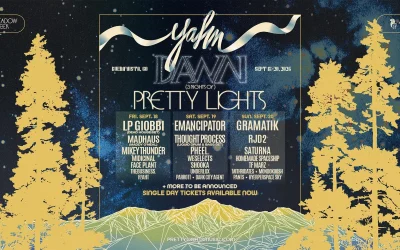
Pretty Lights’ “Yahn Dawn” Reveals Daily Lineups, Single Day Tickets for Buena Vista, Colorado Festival
Pretty Lights’ “Yahn Dawn” festival returns to Buena Vista, CO with LP Giobbi, MADHAUS, Emancipator,, Gramatik,, RJD2 and more for expanded 3-day festival in September 2026.
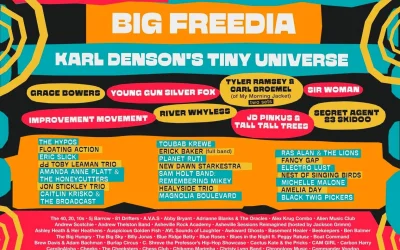
The 2026 AVL Sounds Fest: 200+ Bands, Comedy and More in Downtown Asheville, NC
AVL Sounds Fest, the music festival returning to Asheville Thursday, Aug. 6 through Sunday, Aug. 9, will again bring a sprawling, genre-spanning lineup of more than 200 artists to indoor and outdoor performance venues throughout town.


![The Many Sounds of Tyler Grant: Coming Back Home to Bluegrass [INTERVIEW]](https://www.festygonuts.com/wp-content/uploads/2025/04/flatpicker-tyler-grant-440x264.webp)