“Heart and Horizon”: The Conversation with Bryan Schumann & The Sunshapes [INTERVIEW]

Heart & Horizon: The Conversation with Bryan Schumann & The Sunshapes [INTERVIEW]
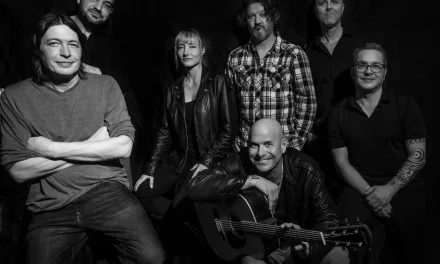
Bryan Schumann is an award-winning, Minnesota-based composer, producer, and singer-songwriter. Blending sounds from pop, folk, indie, rock, electronic, and classical genres, his catchy melodies find homes in upbeat dance tunes and moody ballads alike. With influences across the eras, the best way to describe his sound is timeless.
Schumann’s sophomore album, Heart & Horizon, was released in October 2025. Heart & Horizon was performed in its entirety live with the full band backed by the Havana Quartet at the Minnesota Music Cafe in St. Paul, MN, at the album release show on Oct 26th, 2025, along with special guests Strange Forest, Andrew David, & D.C. Leonhardt.
Interview Contributed to by Krista Vilinskis of Elephants and Flowers Media

Bryan Schumann and The Sunshapes – Heart & Horizon – Album Cover
Bryan Schumann Interview:
Questions by Krista Vilinskis of Elephants and Flowers Media
The Album’s Core
- “Heart and Horizon” feels like it’s reaching outward and inward at the same time — expansive yet intimate. When you were creating it, what ‘horizon’ were you chasing musically or personally?
You really nailed the feeling of Heart & Horizon with that description. The title itself speaks to both intimacy and expansiveness—the heart being what’s close and emotional, and the horizon representing growth and possibility. All of these songs started simply with just voice and guitar or piano. As I play, I naturally start to hear harmonies and instrumental lines weaving in and out, adding color and emotion. With this album, I wanted to go beyond simplicity and create arrangements that still feel clean and intentional, but also larger-than-life at times.
- There’s a palpable sense of hope and reflection throughout the record. How did your life between “Bombshell Tree of Life” and “Heart & Horizon” shape the emotional landscape of this new album?
The songs on “Bombshell Tree of Life” are actually quite old—some were written close to 15 years ago. It just wasn’t until recently that I felt I had the chops and resources to produce them the way I always imagined. So, even though there is only 15 months between the album releases, a whole lot more life happened between when the songs on each album were written. It’s hard to sum up 10 or 15 years of growth, but the difference between my writing in my early twenties and late thirties is undeniable. You can really hear that sense of reflection, acceptance, and maturity that comes with time and experience.
Strings, Sound, and Emotion
- This record is rich with strings — cello, brass, orchestral layers. What draws you to those textures, and what do strings let you express that other instruments don’t?
I’ve always loved blending sounds from different worlds. I started playing piano in elementary school and trumpet in middle school, and I fell in love with the orchestral sounds I heard in movies and video games. I also grew up on pop and rock and picked up guitar in eighth grade, which led to years of playing in metal and rock bands. Studying classical composition in college opened my ears even further to the texture and emotion an orchestra can create.
Since then, I’ve been on a mission to blend those worlds — I’ve written works for string and full orchestra that incorporate electric guitar, and I’ve brought that orchestral influence back into my songwriting. From a technical standpoint, a lot of pop and rock instruments have an initial attack and then decay, but strings and winds let you push through a note more like a voice. They breathe, they emote — and that expressiveness is something I can’t get enough of.
- As a composer and multi-instrumentalist, how do you decide when a song needs the intimacy of an acoustic guitar versus the sweep of an orchestra?
Deciding between the intimacy of acoustic guitar and the sweep of an orchestra often comes down to the words, the feel, or how all the elements interact. Sometimes it’s just a sense of, “You know when you know.” Take a song like “Questions”: it begins pensive and contemplative, with acoustic guitar and delicate, suspended string lines supporting lyrics like, “I question….” Then, as the song unfolds, it opens into the choruses and bridge with punchy drums and marcato strings when the lyrics proclaim, “I love you, I love you, I love you.” It’s all about letting the arrangement serve the emotion and story of the song.
The Craft of Connection
- Your music sits beautifully between the organic and the cinematic. When you’re producing, how do you balance the heart of a song with the scale of its soundscape?
Thank you—that’s a really nice compliment. To answer, I’ll reference something I heard on the Netflix show “Song Exploder” with Ty Dolla $ign. He told a story about spending tens of thousands of dollars on strings—arranger, sound stage, full orchestra—for his song “LA.” In the end, he scrapped about 90% of it and only kept them in one section of the song because he felt that’s what the song actually needed. That interview really stuck with me. There’s always a pull to go maximal, especially after investing time and energy in doing just that, but it’s crucial to listen to your intuition and let the heart of the song guide the scale of the soundscape. I have to move between roles—first I act as a creative, pouring everything in, then as an editor, trimming back to let the heart of the song shine through.
- You’ve described The Sunshapes as an international collaboration. How did that global element shape the spirit or sound of the album? Did you notice cultural influences sneaking in through your collaborators?
A lot of what you hear on the recordings was written and arranged by me—I provided chords, lyrics, melodies, charts, recorded a lot of the elements myself, and even programmed temp drums and instrumental lines. But when I worked with the studio musicians over livestream, I made sure to give them space to “make it their own.” Felipe Ribeiro from Spain crafted his own tones, chord voicings, and comping patterns; Emanuel Pavon from Croatia and Nisa Addina from Malaysia each bring unique phrasing and vibrato to their string lines. The drummers and percussionists also add their cultural feel and flair to fills and grooves. It’s one of those cases where the whole really is greater than the sum of its parts. And that’s just a few of the collaborators—there are many more. You can see the full list here: https://bryanschumann.com/heart-and-horizon-album-lyrics-and-credits
Stories Behind the Songs
- “Open Road” feels like a deep breath after years behind a desk — freedom as both metaphor and melody. When you listen back, do you still feel that yearning, or has it transformed into something new?
While it’s easy to assign metaphor and deeper meaning to “Open Road,” it really was written when I was a decade into a job that had me sitting in a cubicle 40+ hours per week daydreaming about life beyond those office walls. Full disclosure: I was laid off from that job a couple years ago, and haven’t felt that deep yearning to escape in…well…a couple years—LOL. Getting to spend my days finishing these two albums has truly been a blessing and the silver lining of what started out as a rough job-loss situation.
- In “By Your Side,” you reflect on the value of time versus money. Has writing and performing that song changed how you approach your creative life day-to-day?
For me, “By Your Side” is a reminder to weigh the trade-off between time and money. Money can unlock experiences and comfort, but if all your time is spent chasing it, you miss living life itself. Creating art is the same—it’s a choice to spend time on something meaningful, even without a financial guarantee. It’s an act of faith, a way to invest in life experiences rather than just accumulating dollars.
- “Questions” came from a place of isolation and searching. How do you feel about that song now, in a different chapter of your life?
“Questions” came out of a cold January day in 2021, right in the thick of the pandemic. I was feeling lost and uncertain, and the song emerged as an improvisation—a way to process those feelings. Even now, in a different chapter of life, it still resonates. We all question things constantly, and the song’s sense of searching and reflection continues to ring true for me and, I hope, for listeners as well.
- “Ruby” is such a charming and sincere love song to your cat. What do you think pets teach us about presence and unconditional love?
“Ruby” started as a simple, playful love song to my cat, but it really captures something bigger about pets. They can teach us how to enjoy the moment without distraction, and how to give and receive affection without conditions. There’s a sincerity and simplicity in that kind of love that’s hard to find elsewhere, and I think it’s something we can carry into our human relationships too.
Visual Storytelling
- You’ve released several beautifully crafted music videos for this album — each one feels like its own short film. How do you approach the visual side of your storytelling?
Thanks! I actually made a video for every song on the album, and I tried to let each one capture the essence of its song. “Open Road” uses vacation footage from a road trip to the Badlands, giving it a sense of wide-open freedom. Some songs, “All We Are,” “By Your Side,” “Questions,” felt more like stories, so I leaned into a short-film style. “Do Ya Wanna,” takes the form of a lyric video styled as a high-school love letter. “Up to Down” uses visuals to express the nature of love and connection—sometimes abstractly and sometimes literally. “Far & Away” has a classical, chamber-music feel, so I highlighted the written score. Ruby loves sitting on my shoulders when I’m playing guitar and piano, so for that video she and I did just that! And for “Lost Light,” I used epic and dreamy nature visuals to match its expansive, organic sound. I really try to listen to what each song wants visually and bring that to life.
- Is there a particular video from “Heart & Horizon” that you feel captures your vision for the album most completely?
Each video has its own charm and is so specific to its song, but I’m especially happy with how the video for “All We Are” turned out. I think it really captures the thrill of a meet-cute evolving into a deep relationship. That excitement and love story feels central to the spirit of the album.
Process and Presence
- Your background spans film, video games, orchestral work, and indie songwriting. How do you switch creative gears between those worlds — or do they all inform each other in ways you don’t consciously separate anymore?
I’ve always loved blending sounds from different realms and eras. At a certain point, it all just becomes sound to me—especially after years of manipulating audio for production projects and doing avant-garde free-improv electro-acoustic performances (something I was deep into through the 2010s). Ultimately, it’s all about trying to represent what I hear in my mind and feel in my heart, no matter the medium.
- Do you start songs from melody, lyric, or texture — or does it change depending on the emotional spark?
I’ve actually coined a term for my process: “strumbling”—a mix of strumming and mumbling. That’s basically how most of my songs start. I pick up a guitar or sit at the piano and noodle around until something clicks and gives me that “ah-ha!” feeling. Then I start mumbling melodies and lyrics, feeling out the song organically. Sometimes little phrases pop into my head and I jot them down, and occasionally a full song’s lyrics come first—but 90% of the time, it’s all stumbling.
Themes and Reflections
- A lot of your songs wrestle with uncertainty — yet they always land on light, love, or connection. Do you see songwriting as a form of self-guidance or therapy?
I hadn’t really realized such a through line until you mentioned it. For me, creativity—and songwriting in particular—is definitely a way to process emotion and life experiences. If others find healing, comfort, or growth through my songs, that’s just the icing on the cake and truly warms my heart.
- There’s a real tenderness in how you write about love — not as perfection, but as presence. Has your understanding of love changed through the act of songwriting?
As our world has sped up exponentially over the past few decades, I’ve definitely noticed a growing sense of distraction in myself. Over time, I’ve tried to find ways to be more present. I’ve heard spiritual leaders speak of love as presence—it’s both a feeling and an act. Reflecting on my songwriting, I realize that many times, when I write about love, I’m exploring that same idea: what it means to be fully present.
Looking Ahead
- You’ve called this your “sophomore” album as a singer-songwriter, but you’ve already built a huge body of instrumental work. What have you learned about your own voice — literally and figuratively — through this transition?
That’s correct. While “Heart & Horizon” is my sophomore singer-songwriter album, I’ve actually been composing and producing instrumental music for over 20 years and have performed as a guitarist on a handful of albums with different bands over the years (Mindfill, The Art Heist, Velvet Sol). I’ve also written hours of music for all sorts of classical ensembles from solo piano and brass quintet to full orchestra. Furthermore, I’ve produced music for short films, video games, meditations, podcasts—you name it. All told, I’ve released nine instrumental albums, seven EPs, and dozens of singles under my name.
I wanted to semi-separate my catalog of instrumental work from my songs with lyrics, and my wife, Kate DeVoe, actually came up with the name The Sunshapes back in 2014. We had been performing as a duo and with a rotating cast of other musicians on my songs since 2008, and although I write the songs, she’s been collaborating with me for a long time as a performer, and she’s recorded trumpet on some of my instrumental music as well.
As prolific as I’d been in producing instrumental recordings and writing original songs, I always found it difficult to finalize recordings of the songs. I grew up with the idea that you form a band, jam until you find the sound, record that sound, and then perform it live the same way. It’s the same concept in the classical world—you write the notes, and the ensemble performs the notes. With production music, on the other hand, you create sound design and record countless elements that are never meant to be performed live. My songs fell somewhere in the middle. I never had a consistent live band, and the recordings existed in this hybrid space as I tried to make the arrangements match an ever-evolving ensemble. The result? Over 20 songs stuck in limbo for years.
In late 2022, I reached out to producer Andy Thompson for help finishing them. He told me something that completely changed my approach: “Forget about the live sound. Do whatever you want on the recording, and do whatever you want live.” That freedom unlocked everything. I brought him a recording that was 90% done and he helped me produce, record, and mix the song “About Love” by first helping me break out of my old mindset and then getting Alexander Young on drums and Ian Allison on bass – both of whom recorded knock-out parts remotely.
Seeing that recording come together, I thought, “I could do this!” So, I first recorded everything I could myself on all of these songs—vocals, guitars, bass, keys, some trumpet, some percussion, and then programmed drums and string arrangements. I then recorded my wife’s vocal and trumpet parts. From there I brought in other remote musicians through a service called Musiversal to record the final drums, strings, and a handful of other elements. Each song has a different lineup, so it truly is a global collaboration.
- If “Heart & Horizon” is about the balance between those two ideas — heart and horizon — where do you feel you’re standing now? What’s next on your creative map?
I’ve been toying with the idea of releasing an album or EP that’s the polar opposite in scope. After spending the last few years on albums that embrace expansive arrangements, I’d like to create a collection that’s closer to the heart…minimalist, maybe just guitar and voice. At the same time, I plan on continuing to release a track per month with Ambient Embrace, which remains a space for expansive reverb, soaring instrumental lines, and open sonic exploration.
Quick, Reflective Closers
- If your sound were a landscape, what would it look like?
If the collection of all of my projects were a landscape? Well, you know that image in the back of the geography textbook that has every single kind of landform crammed into one image? Mountains, rivers, deserts, forests, volcanos, islands, oceans—all existing together in one expansive, slightly chaotic but beautiful vista. I’m thinking it’s something like that—LOL!
- What emotion or thought do you hope listeners carry with them after the last note of “Lost Light”?
My hope is that listeners find a moment to pause and reflect—take a breath, sit with whatever they’re feeling, and let the music speak to them. The second half of “Lost Light” fill so much space sonically, and the silence that exists after that last reverb tail fades is an opportunity for stillness and self-connection.
- When you think about legacy — the music you’ll leave behind — what do you hope it says about you?
In the end, I hope I’ve done my part to make the world a more beautiful place. The chorus of the title track on “Bombshell Tree of Life” says, “Just think if in place of all destructive motivations, the world was full of wonderful creations.” That idea—whether on a global scale or in the small moments between people—I hope it is heard, felt, and acted on.
Bryan Schumann Website and social media:
Website: https://bryanschumann.com/
Instagram: https://www.instagram.com/
Facebook: https://www.facebook.com/
YouTube: https://www.youtube.com/

Bryan Schumann – Press Pic | Photo credit: Vincent Weglarz

MerleFest Unveils Initial Lineup for 2027 Festival
MerleFest, presented by Window World, has unveiled lineup details for its 2027 event.

An Open Letter To Live Music Venues and Promoters
Live music venues and promoters: You’re doing it wrong. A simple shift in concept can change everything and make everyone happy.

An Interview with JoJo Green on “Paint the Sky – Part 1” and more.
JoJo Green returns with “Paint the Sky – Part 1,” a 5-song EP that shows a more adventurous sound from the St. Paul, MN band. Read the interview.

Ship of Fools: Rhythm & Sails Announces a Grateful Dead Voyage for Spring 2027
Rhythm & Sails Announces a Grateful Dead Voyage with Grahame Lesh, Holly Bowling, Anders Beck, Travis Book and Mark Morris through St. Vincent & the Grenadines, May 22-28, 2027.

Interview: Twin-Cities-based Cassandra Cole on New EP “The Grey”
An interview with Twin Cities artist Casandra Cole on her new EP, “The Grey.”

Moonshiner’s Ball 2026 Review: 17 Reasons To Shine On At Moonshiner’s Ball
The 12th Annual Moonshiner’s Ball took place on October 8–11, 2026, at the Rockcastle Riverside in Livingston, Kentucky. Hosted by The Blind Corn Liquor Pickers, the intimate festival featured Pigeons Playing Ping Pong, Béla Fleck, and Fruition.
Reviving the Vibe: A Trip Thru Time at Yahn Dawn 2026
REVIEW: Pretty Lights’ “Yahn Dawn” festival returned to Buena Vista, CO in September 2026 with LP Giobbi, MADHAUS, Emancipator,, Gramatik,, RJD2 and more.
Get Your BaygrASS to Annapolis for Baygrass Festival: 2026 Annapolis Baygrass Festival Review
Get Your BaygrASS to Annapolis for Baygrass Festival: 2026 Annapolis Baygrass Festival Review Annapolis Baygrass Music Festival took place at Sandy Point State Park in Annapolis, MD, on September 19 & 20, 2026. Headliners Little Feat and Sam Bush were joined by...

North Carolina Folk Festival: Free Music in Greensboro, NC with St. Paul and the Broken Bones, The Roots and Molly Tuttle
The North Carolina Folk Festival will return to Greensboro, NC, September 19 – 21, 2026. This non-profit event blends music, community, and culture for a multi-day event with free admission for everyone. This year’s music lineup features St Paul and the Broken Bones, The Roots and Molly Tuttle.